
Connected Care Management Platform
Helping Healthcare Organizations Focus the Right Resources on the Right Patients at the Right Time.
HealthCore360 helps healthcare organizations improve patient care, operational visibility, and continuity by connecting care management services, existing technologies, and leadership insight within one connected platform.
Whether supporting Fee-for-Service, APCM, Value-Based Care, Population Health, or Community Health initiatives, HealthCore360 works alongside your existing EHR, RPM vendors, devices, and care teams to help keep patients connected throughout their healthcare journey.
Healthcare Isn't Short on Technology.
It's Short on Time, Staff, and Visibility.
Healthcare organizations today face growing pressure to:
- Care for more patients with fewer staff
- Improve patient outcomes
- Reduce avoidable hospitalizations
- Coordinate care across multiple programs
- Demonstrate ongoing medical necessity
- Support documentation and compliance
- Maintain continuity across the patient journey
The challenge isn't finding another software application.
The challenge is helping care teams and leadership know what requires attention, where to focus resources, and how to keep care connected over time.

Connected Care Management
Patients do not experience healthcare one program at a time.
Their needs change, and their care should change with them.
HealthCore360 supports Connected Care Management by helping organizations coordinate physician-directed services such as:
• APCM
• RPM
• CCM
• TCM
• Care Coordination
• Behavioral Health
• Other care management services
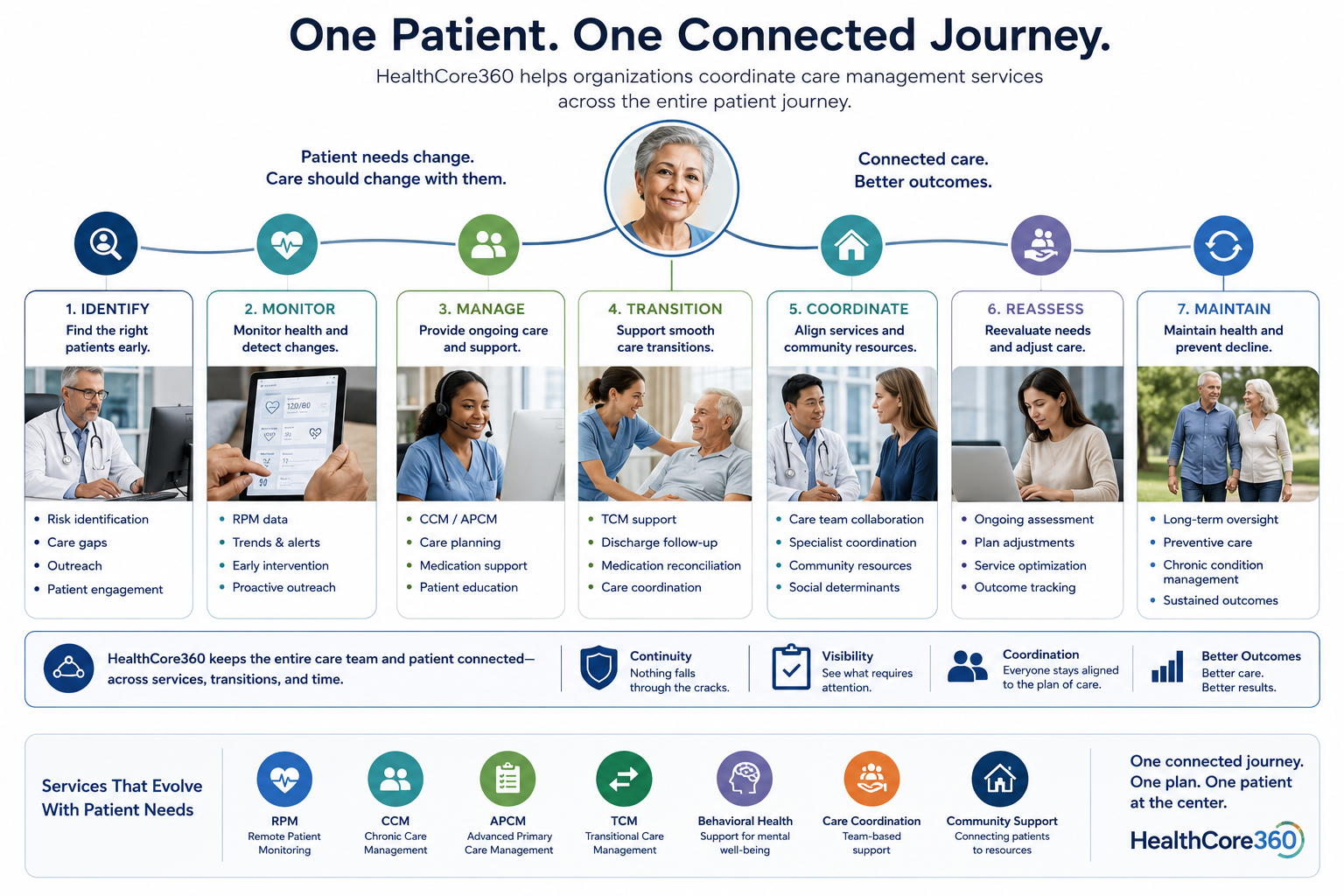
All supported through one connected operational roadmap aligned with the physician's plan of care.
One Platform. Your Existing Systems.
HealthCore360 is designed to work with—not replace—your current healthcare environment.
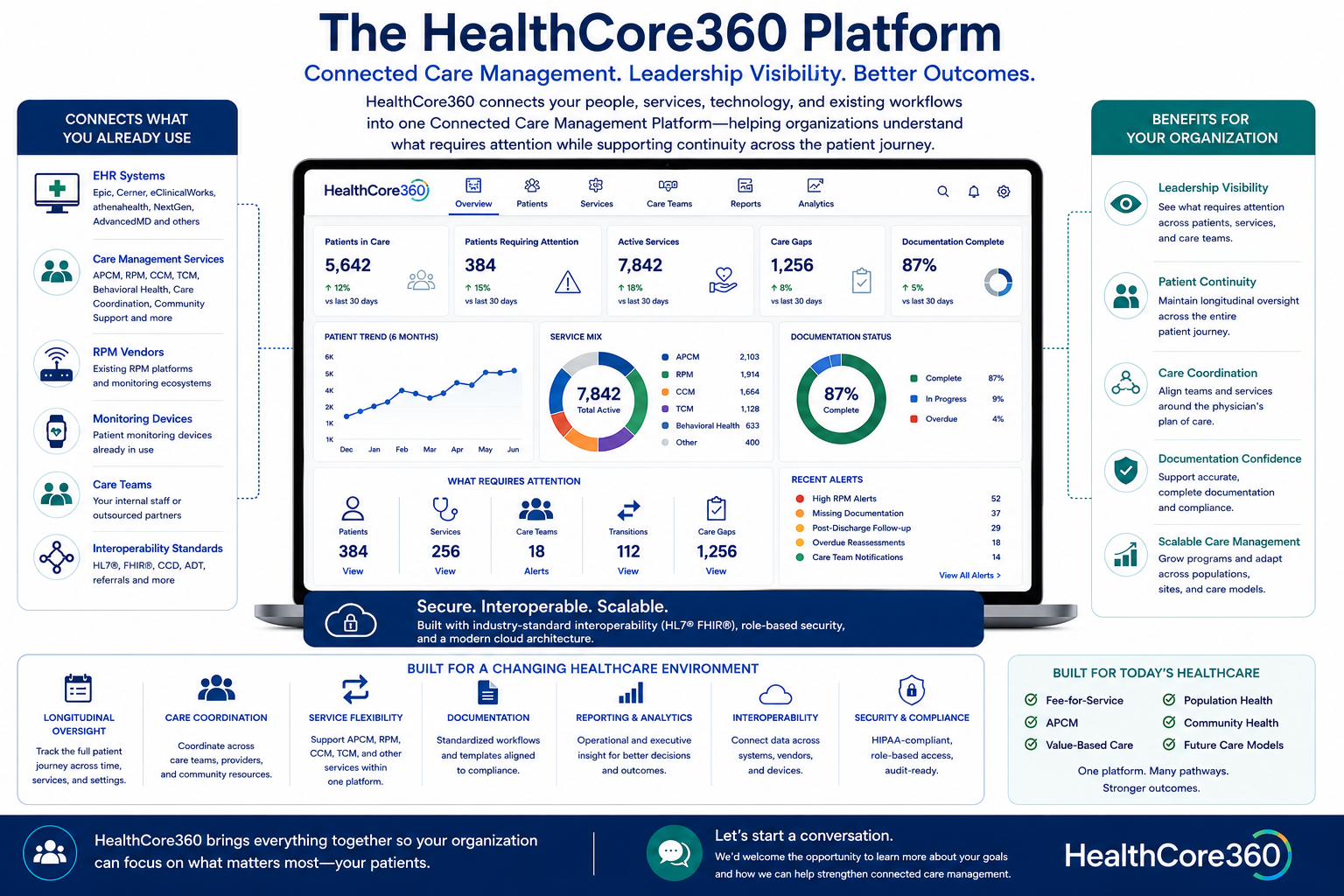
Healthcore360 connects your existing care management environment into one Connected Care Management Platform that helps organizations understand what requires attention, priortize limited resources, and maintain continuity across the patients journey—without replacing the trusted systems, vendors, care teams, or workflows you already rely on.
Organizations may continue using their own care management teams or work with a trusted HCUnity-enabled care management partner.
What Problems Are We Helping Solve?
Healthcare organizations tell us they struggle with:
• Limited staff and increasing workloads
• Fragmented care management programs
• Patients falling through the cracks
• Difficulty knowing which patients require attention first
• Growing documentation and compliance requirements
• Operational inefficiencies across multiple vendors and systems
• Scaling care management while maintaining quality
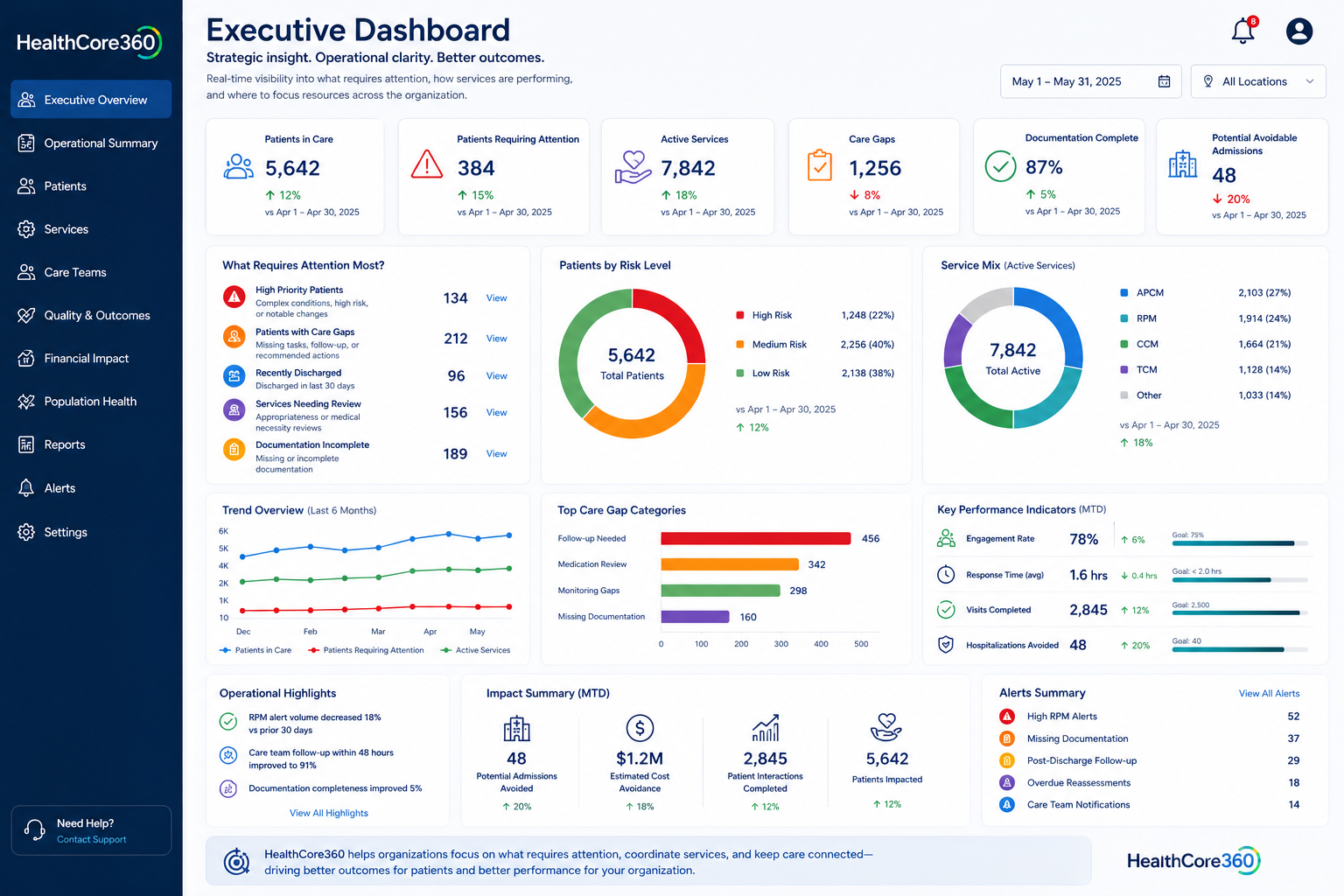
HealthCore360 helps organizations address these challenges while continuing to use the technology and workflows they already trust.
Leadership Visibility
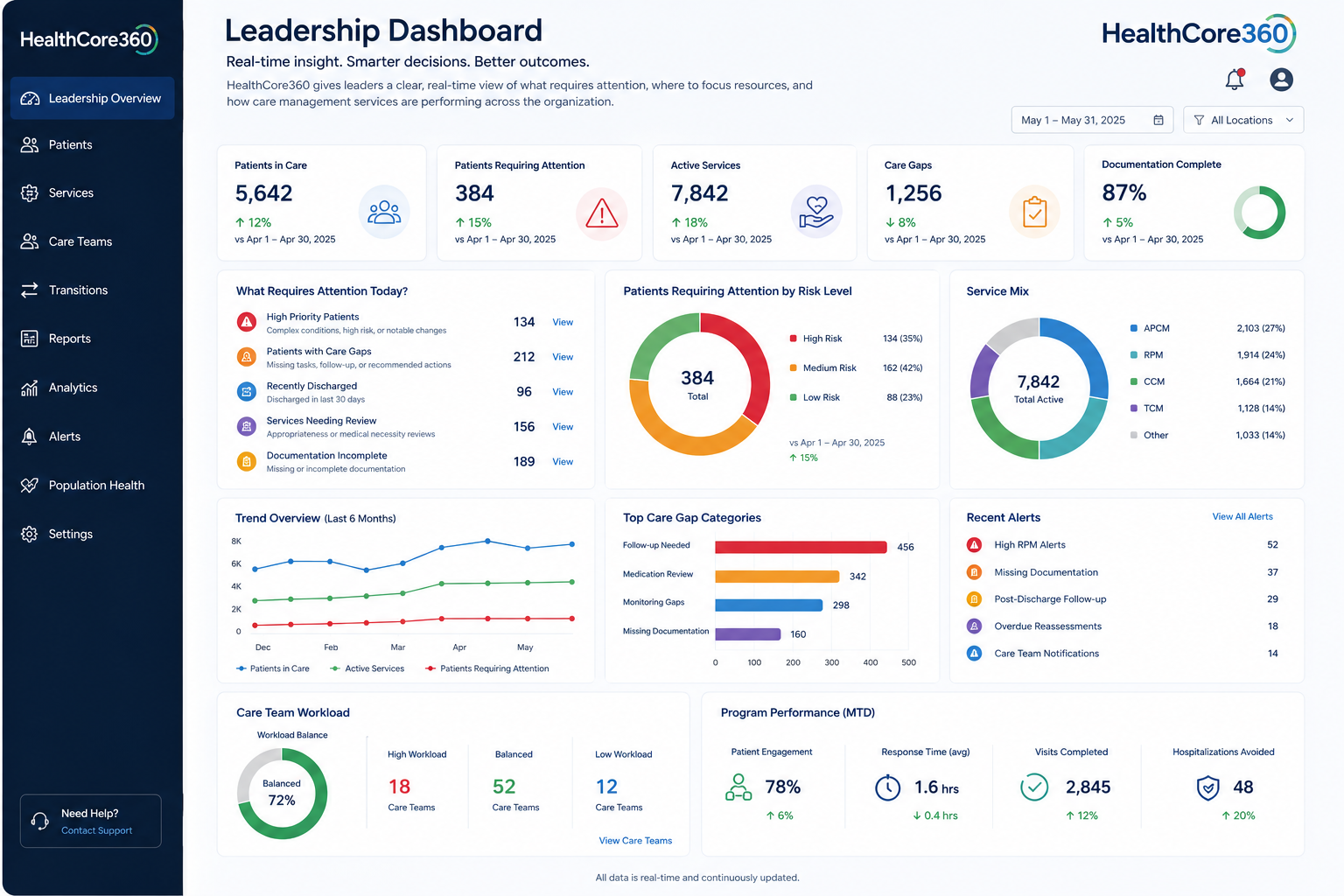
Healthcare leaders don't need more reports.
They need meaningful operational insight.
HealthCore360 helps leadership understand:
• Which patients require attention
• Which services require reassessment
• Operational bottlenecks
• Care coordination opportunities
• Documentation status
• Care management activity
• Continuity across the patient journey
Helping leaders make informed decisions while supporting clinical teams.
Connected Services Across the Patient Journey
HealthCore360 supports physician-directed care management services that can evolve as patient needs change.
Rather than operating as separate programs, services work together within one connected care management structure.
Examples include:
• Advanced Primary Care Management (APCM)
• Remote Patient Monitoring (RPM)
• Chronic Care Management (CCM)
• Transitional Care Management (TCM)
• Behavioral Health
• Care Coordination
• Community Support Services
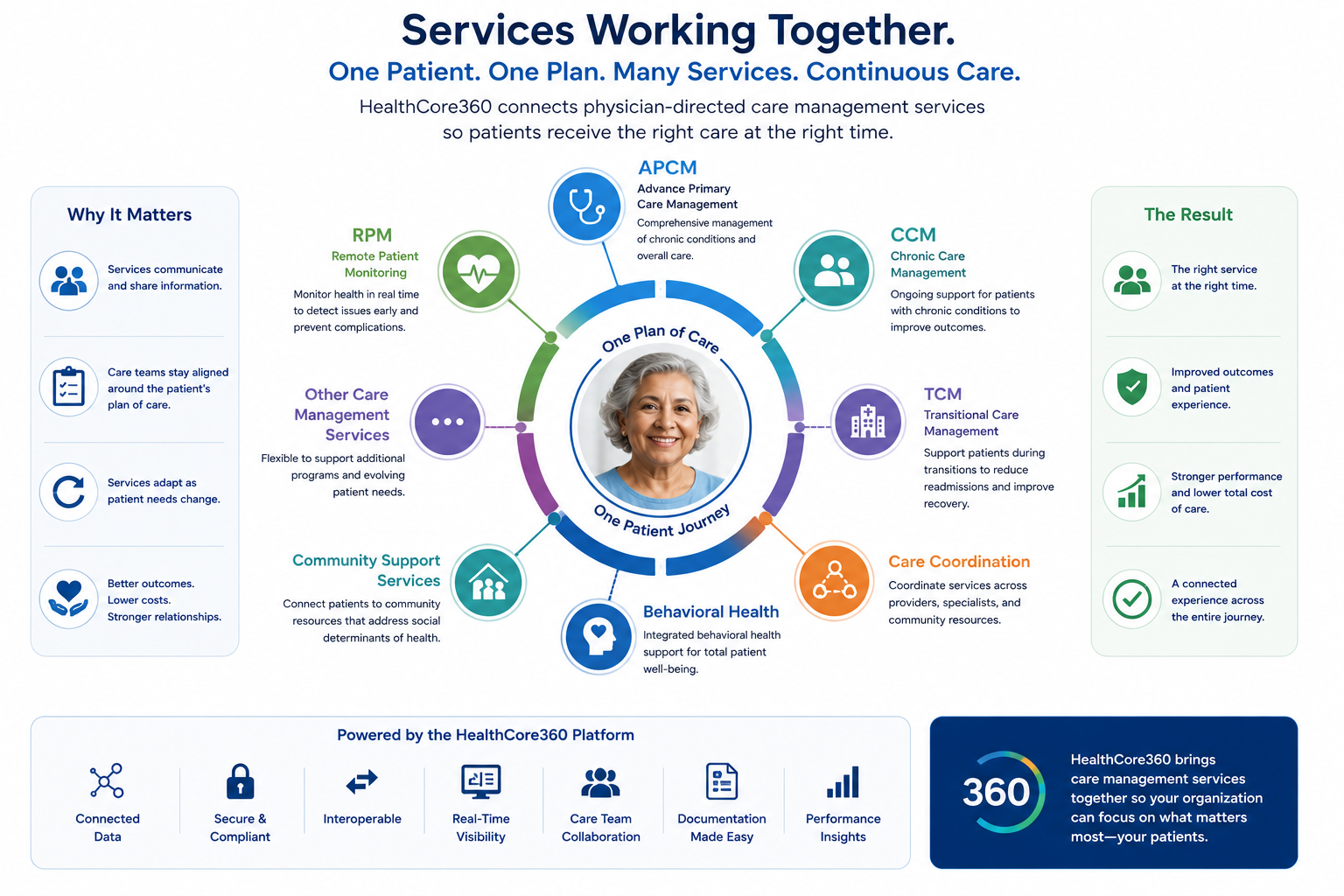
Patients remain connected while services adjust to support changing needs.
Built for Today's Healthcare. Ready for Tomorrow's.
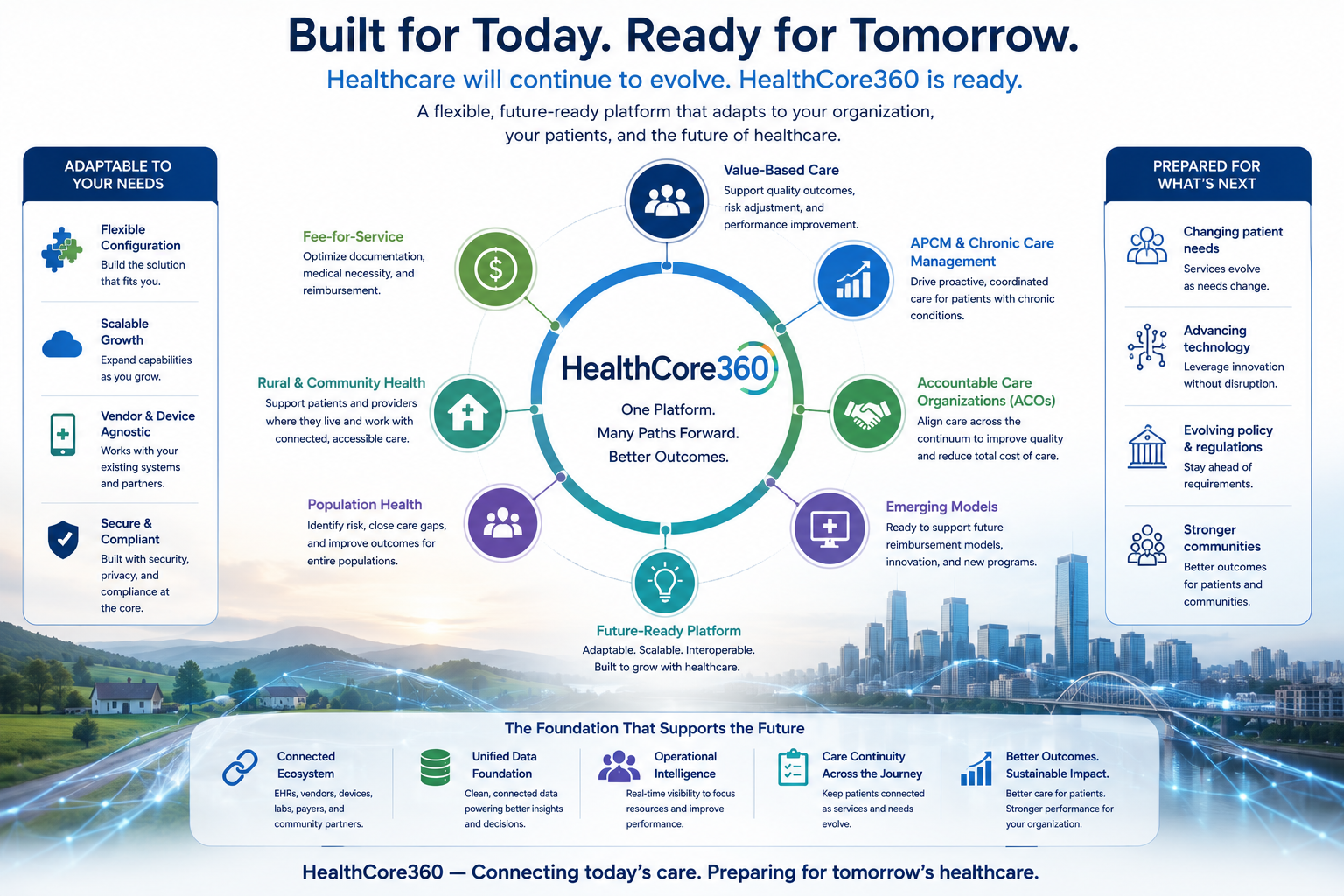
Healthcare continues to evolve.
HealthCore360 is designed to support organizations as reimbursement models, patient populations, and operational demands continue changing.
Whether your organization focuses on:
• Fee-for-Service
• APCM
• Value-Based Care
• Population Health
• Rural Health
• Community Health
HealthCore360 provides the connected operational care management foundation needed to support patient care today while preparing for tomorrow.
See What HealthCore360 Can Do For Your Organization
HealthCore360 helps healthcare organizations connect care management, improve operational visibility, strengthen continuity, and support better patient outcomes without replacing the systems they already use.
Let's discuss how HealthCore360 can support your organization.